
Platform · Choice Engine®
The price tag is only part of the price.
CLEARCOST® shows what an appliance costs to buy and run over its life. YOUSAVE® shows what the efficient choice saves against a similar, less efficient model. Both appear on every eligible product in your marketplace.

Two numbers, one question
What will this appliance really cost me — and what does the better one save?
Shoppers compare sticker prices because that is the only cost they can see. CLEARCOST® and YOUSAVE® put the running cost next to it, in dollars, before the purchase.
-

The total cost of buying and running an appliance over its life.
Lowest retail price + Lifetime energy cost = CLEARCOST®
The price is the lowest available from trusted retailers. The energy cost uses the product's rated consumption, typical usage for the category and the local electricity rate — the utility's actual rate where available, otherwise the state or national average — over the typical lifespan of the product from U.S. Department of Energy data.
-

What the efficient choice saves against a similar, less efficient model.
Energy cost, similar model − Energy cost, this model = YOUSAVE®
The comparison is a model of similar size, capacity and performance at the average efficiency for its class, per EPA data, over the same period and with real-time energy prices. Replacing an older, less efficient unit, the real saving is usually larger than the figure shown.
Worked example
The cheaper sticker is rarely the cheaper refrigerator.
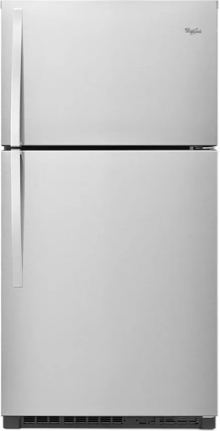
Two top-freezer models, 12-year lifespan. Move the electricity rate to your territory's and watch the gap change.
| Efficient model |
 Similar model Similar model |
|
|---|---|---|
| Lowest retail price | $1,399 | $1,299 |
| Energy use | 318 kWh/yr | 477 kWh/yr |
| Energy cost, 12 years | $1,145 | $1,717 |
| CLEARCOST® | $2,544 | $3,016 |
Illustrative models: $1,399 at 318 kWh/yr vs. $1,299 at 477 kWh/yr. Real listings use each model's rated consumption and the utility's actual rate, falling back to the state or national average.
What goes into it
Four inputs, all on the record.
The same data pipeline that produces the Enervee Score® feeds both figures, so they update when prices, ratings or rates change.
-
Price
The lowest available retail price from trusted stores, refreshed with the marketplace catalog.
-
Rated consumption
The model's certified energy use — the same figure the Enervee Score is built on.
-
Usage and rate
Typical usage for the category and the utility's actual electricity rate where available. Without that context, the state or national average applies.
-
Lifespan
The typical lifespan of the product category, from U.S. Department of Energy data. YOUSAVE compares both models over the same period.
Why it matters to your program
A cost the customer can see is a cost the customer avoids.
-
Loss framing
Customers act to avoid a loss
People weigh a cost they would incur more heavily than an equal saving they might gain. CLEARCOST makes the running cost of the inefficient choice concrete, in dollars.
-
Beyond the rebate
Influence without incentive spend
Both figures work on every eligible product, rebated or not — part of how the marketplace moves choices toward efficiency on its own.
-
Your numbers
Set to your territory
On your marketplace, figures use your actual rates, so the savings a customer sees match what your program communicates elsewhere.