
Programs · Income-qualified
Income-qualified participation you can put in a filing.
Income-qualified households replace appliances when they fail, pay the most for the least efficient models, and rarely see a rebate program in time. Put the whole program — guidance, incentive, monthly payment and installation — in the one place they already are: the checkout.

The real problem
The households that need efficiency most are the ones a rebate alone doesn't reach.
-
53%
of U.S. adults can’t cover a $1,000 unplanned expense — the typical price of an efficient appliance. When the old one fails, the cheapest unit in stock wins by default.
Source: Bankrate 2026 Emergency Savings Report (YouGov, Dec 2025, n=2,564)
-
Distressed
Shoppers replacing a broken appliance chose significantly less efficient models than planned buyers. The Enervee Score closed that gap — and worked most strongly among low-income shoppers.
Source: Arquit Niederberger & Champniss, Energy Efficiency 11:1657–1671, 2018 (peer-reviewed, four studies)
-
Weeks
A mail-in rebate arrives weeks after the purchase. For a household that could not afford the price on the day, a later refund does not change what they bought — or whether they bought at all.
Program design observation; see Fast Track™ for post-purchase delivery where instant is not possible
How the program works
Not a separate program. The same checkout, with the barriers removed.
-
01
Guide the choice with the Score
Every model on the market rated 0–100, updated daily. Peer-reviewed research shows the Score lifts the efficiency of the product chosen — and that the lift is strongest for low-income and distressed buyers.
-
02
Apply the income-qualified incentive at checkout
Eligibility checked in the flow; the adder stacks on the standard rebate and shows in the price before purchase. No application, no waiting — instant, or via Fast Track™ where a purchase happens elsewhere.
-
03
Turn what’s left into a monthly payment
Eco Financing® at checkout, underwritten by lending partners, off your balance sheet. Pre-qualification with no credit impact; risk-based pricing built to reach the customers retail financing misses. Never a substitute for the rebate — the mechanism that lets the customer act on it.
-
04
Deliver, install and haul away in the same order
One fixed price, set before anyone enters the home. For income-qualified households this removes the second barrier after price: finding and vetting an installer.
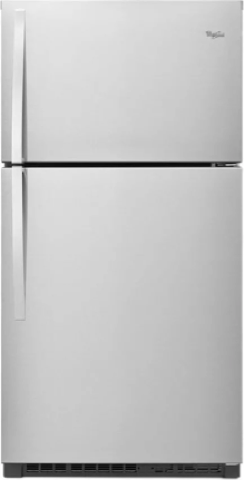 94
94
 60 months · pre-qualify, no credit impact
Eligibility verified at checkout; the adder and the monthly payment appear before the customer commits. *Illustrative figures — not a live program offer.
Independent evaluation
Two state programs. Two evaluators. The same answer.
CPUC GoGreen Home impact evaluation (2024) · NYSERDA NY Marketplace final report (2024)
Without an income screen at the door. Financing at checkout broadened participation on its own, because the process was simple and the payment was affordable.
would have bought at the same or higher efficiency without financing. Four in five would have bought less efficient — or not at all.
Against 35% of New Yorkers living in them. For a program with a DAC participation target, that is the measured lift — not a talking point.
Customers with financing also chose higher-efficiency products — more kWh and therm savings per transaction, from the same incentive budget.
Program design
What changes when income-qualified delivery is a checkout setting.
Income-qualified programs usually run as a separate track with its own intake, its own contractors and its own reporting. On the marketplace they are a configuration of the same program.
One program, two configurations
Standard and income-qualified customers use the same marketplace; eligibility unlocks the adder and any qualified financing terms. One set of workpapers, one evaluation.
Participation you can report
Every income-qualified transaction is a record — product, Score, incentive, financing, install — reportable by ZIP, DAC status or eligibility path, in the form your filing needs.
Budget stretches further
Financing reaches households the rebate alone would not convert, so the same incentive budget produces more completed installs — the finding behind the CPUC and NYSERDA results.
Starts with what you already fund
Any measure in the marketplace can carry an income-qualified adder — refrigerators, washers, water heaters, thermostats — so the income-qualified program launches inside the EE portfolio you already run.